TL;DR: Digital kidnapping is when someone takes a photo of a child from social media and reuses it, often claiming the child as their own or roleplaying as their family. It sounds like an internet myth. It has happened to real families, repeatedly, and it starts with a single public photo.
Most parents have never heard the term “digital kidnapping” until it happens to someone they know, or until a story about it turns up in the news. It is one of the stranger, more uncomfortable corners of what public photo sharing can lead to. It is worth knowing about precisely because it is so unfamiliar, and because knowing about it is most of what it takes to avoid it.
What digital kidnapping actually is
Digital kidnapping happens when someone takes a screenshot of a child’s photo from a public post and reposts it elsewhere, usually claiming the child as their own. In some cases this is roleplay. A corner of the internet where people act out having a “virtual family,” assigning the stolen photo of a real child to play the part of a son or daughter. In other cases the motivation is darker.
The Center for Digital Ethics and Policy has documented real cases behind this pattern. A man in New York took photos of a four-year-old girl from Dallas and posted them on Facebook, claiming she was his daughter.
A Scottish newspaper investigation found more than 570 selfies stolen from Scottish girls, and over 700 from girls in Northern Ireland. All reposted without consent, some ending up on sites with no connection to the original families at all. One especially uncomfortable legal detail from that reporting: in most places, there is no law against pretending someone else’s child is related to you.
Why this is possible in the first place
It comes down to one simple fact. A public photo has no owner once it is out. Anyone can save it. Nothing about a screenshot identifies who the child actually belongs to, and nothing stops it from being copied again from wherever it lands next.
Platforms have gotten faster at removing reported content. But removal happens after the fact, once a parent has already found out and filed a report, not before. By then, the photo may already have been saved and reposted somewhere else entirely.
What actually reduces the risk
None of this means hiding your kids from the internet forever. It means being a little more deliberate about where their photos actually end up, and who can reach them once they are there.
A few habits make a real difference, without requiring anyone to stop sharing photos of their kids entirely:
- Keep photos inside a closed group, family and trusted friends only, rather than a public or semi-public account.
- Turn off “public” as the default visibility on any platform where it is not obvious.
- Be cautious with photos that clearly show a child’s face alone, especially ones that read as portrait-style rather than candid.
- If a photo does get stolen, most platforms have a dedicated impersonation or stolen-content report path, and acting quickly matters.
Why closed sharing is the real fix
The uncomfortable truth is that no setting fully protects a photo once it is public. “Public” is the whole problem. The only complete fix is keeping the photo out of public reach in the first place.
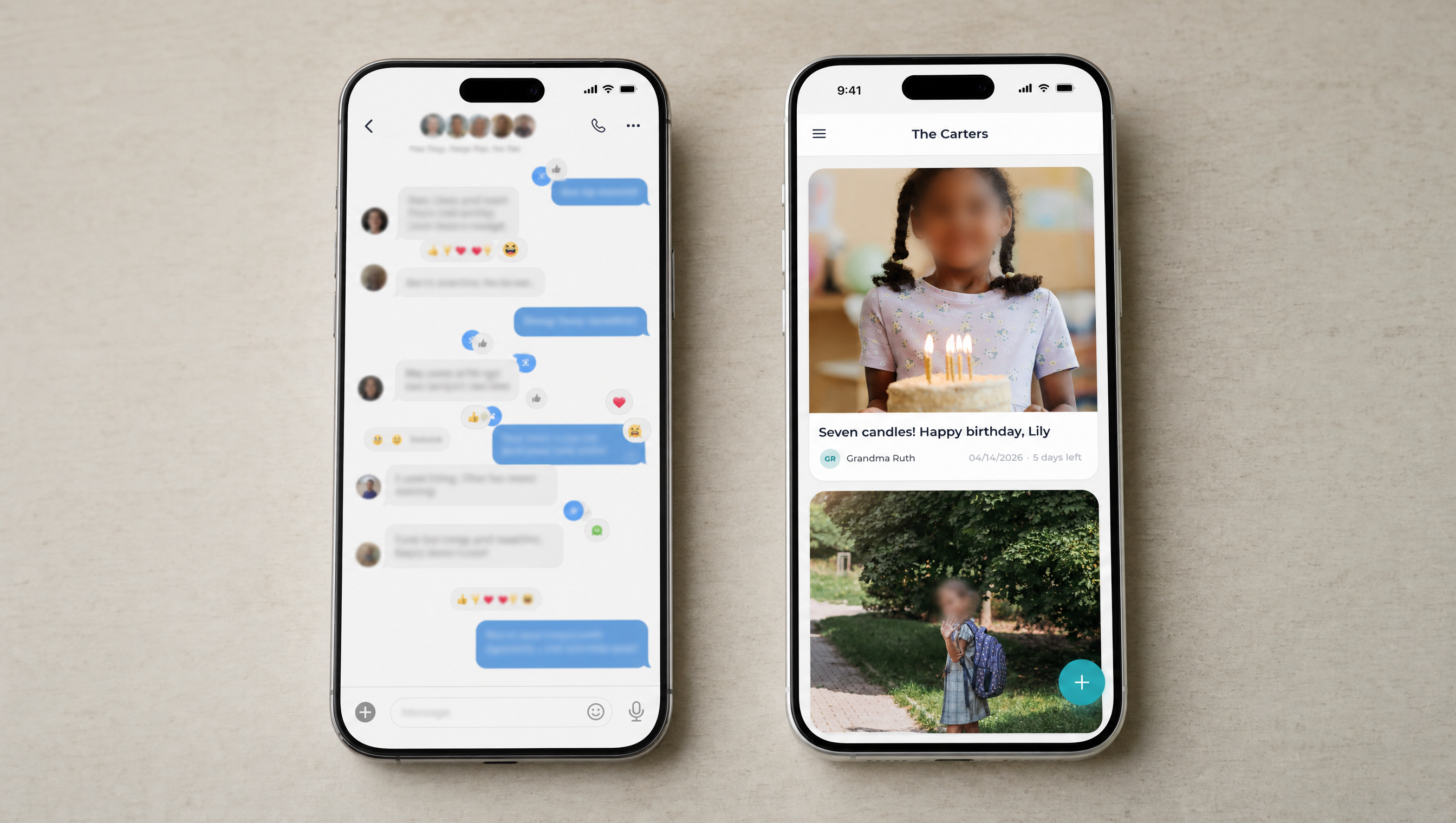
That is the entire premise behind Kinfeed. A closed feed, visible only to the family you invite. Nothing indexed, nothing searchable, nothing reachable by anyone outside that group. It will not undo the internet’s past, but it closes the door going forward. We wrote more broadly about what changes once any photo goes public, including AI-specific risks beyond digital kidnapping, in this piece on posting kids’ photos online. You can read more about why we built Kinfeed this way on our about page.
FAQ
What is digital kidnapping?
Digital kidnapping is when someone takes a child’s photo from a public social media post and reposts it elsewhere, often claiming the child as their own or using the photo in online roleplay as a “virtual family.”
How common is digital kidnapping?
Exact numbers are hard to pin down since most cases are never reported, but documented investigations have found hundreds of stolen children’s photos reposted without consent, and individual cases continue to be reported by families and journalists.
How do I know if my child’s photo has been stolen?
Most parents find out by chance. A friend spots it. A reverse image search turns up a match somewhere unexpected. There is rarely a warning first. Keeping photos in a closed, non-public app in the first place is the most reliable way to prevent it from happening at all, since a photo that never becomes public has nothing to steal.