TL;DR: Posting photos of your kids online is not the same question it was ten years ago. Once a photo is public, it can be scraped for facial recognition, cloned into a fake voice, or reused by a stranger. Closed, no-tracking sharing is the safer default in 2026.
A decade ago, the worry about posting kids’ photos online was mostly a stranger scrolling past and forming an opinion. That is not the worry anymore. Photos today are read by machines as much as people, and machines can do things with a face that a person scrolling by never could.
What happens after you post photos of your kids online
Once a photo leaves a closed circle, you lose track of it. It can be saved, reposted, or pulled into a dataset without you ever finding out. Kaspersky’s research center puts real numbers on this: 75% of parents have shared their children’s images on social media, and 33% have never asked their child’s permission before posting. Most of those parents were not being careless. They just had no real way of knowing what happens after they hit “share,” since the photo itself does not come with a warning label.
The risks that are new since your last thought about this
A few things have changed enough to be worth a fresh look, even if you already have a privacy setting or two in place.
- Facial recognition models train on public photos. One clear photo of a child’s face is enough for a system to learn it.
- Voice and image cloning tools can now build a convincing fake from a single clip or picture, which is the basis for a growing number of scam calls that impersonate a child in distress.
- Combined with a name, birthday, or school mentioned in a caption, a photo becomes a starting point for identity theft.
- Public photos of children have been screenshotted and reused by strangers, sometimes in role-play accounts pretending to be the child’s family. We go deeper into this specific pattern, known as digital kidnapping, in a separate article.
None of this means you did something wrong by posting a birthday photo in 2019. Nobody was warned about any of this at the time, and most people were simply doing what everyone around them was already doing. It means the ground shifted since then, and 2026 is a reasonable time to shift your habits along with it.
A simpler standard: who actually needs to see this
Here is a question worth asking before the next photo goes up: does this need to reach the public internet, or does it just need to reach my family?
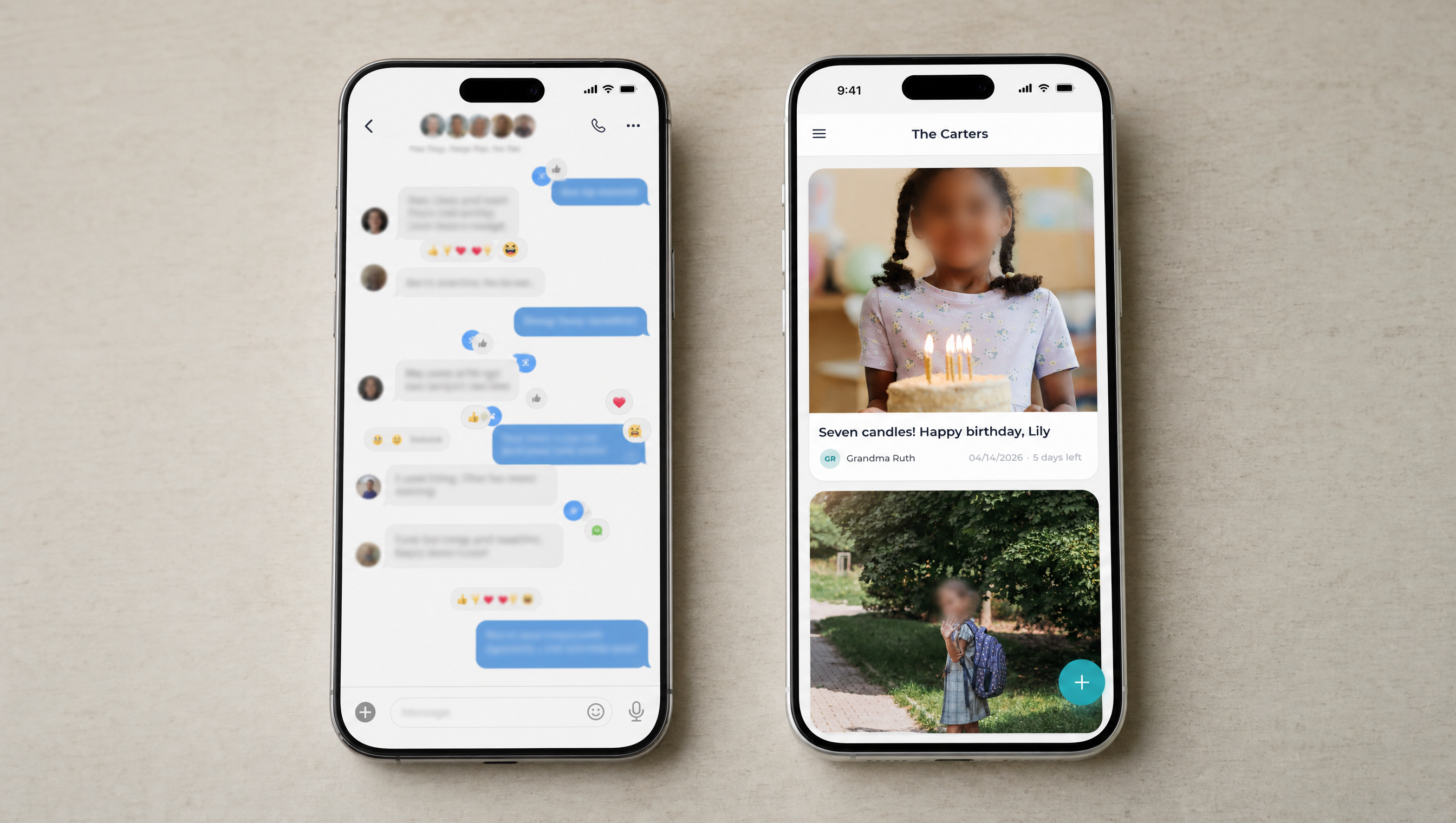
For most baby photos, birthday cake disasters, and first-day-of-school pictures, the honest answer is the second one. A grandparent in another country, a sibling three time zones away, an aunt who cannot make it to visits often. That is the actual audience, and it is a small, known group of people, not an open platform with an algorithm and an ad business behind it.
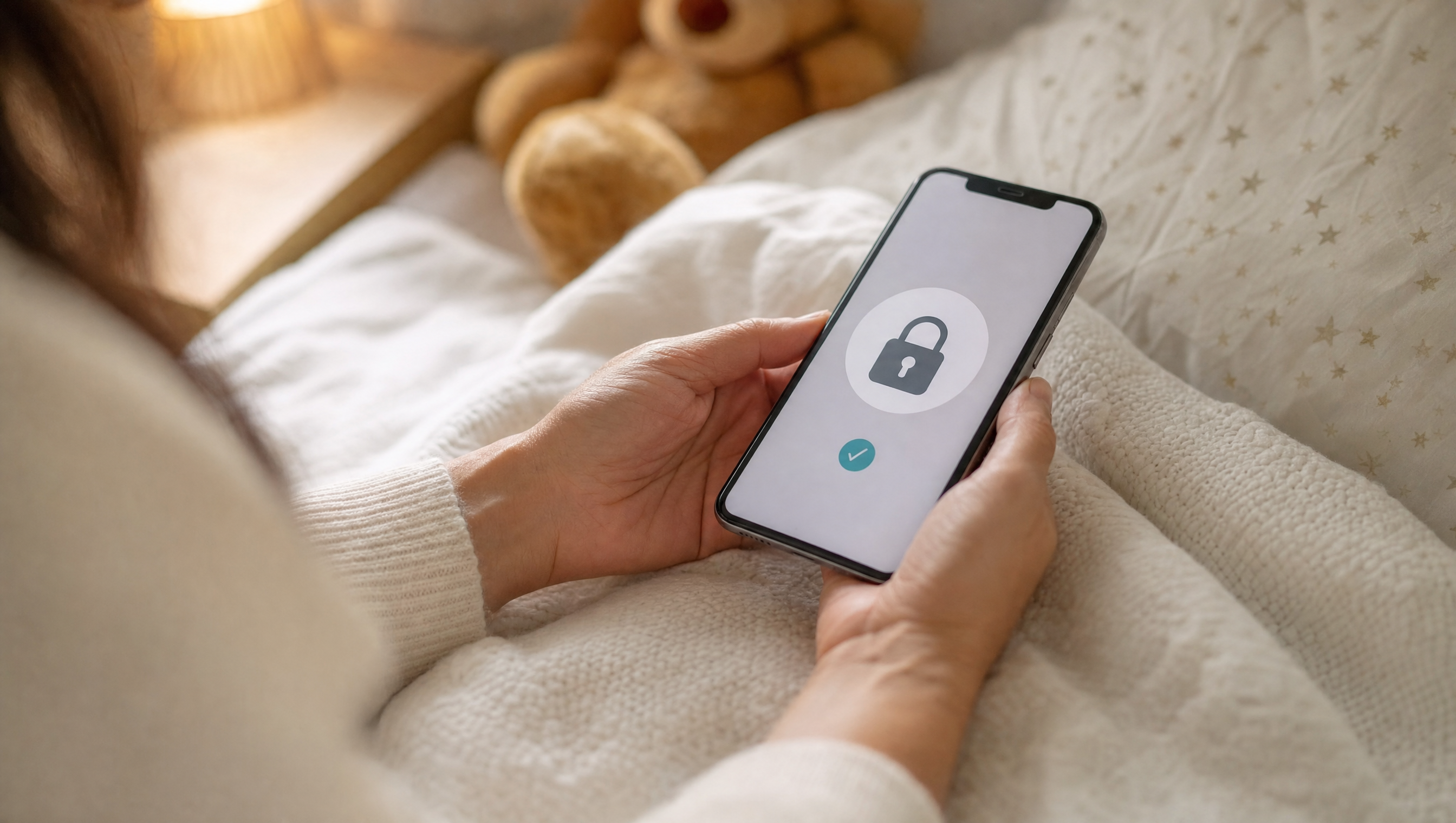
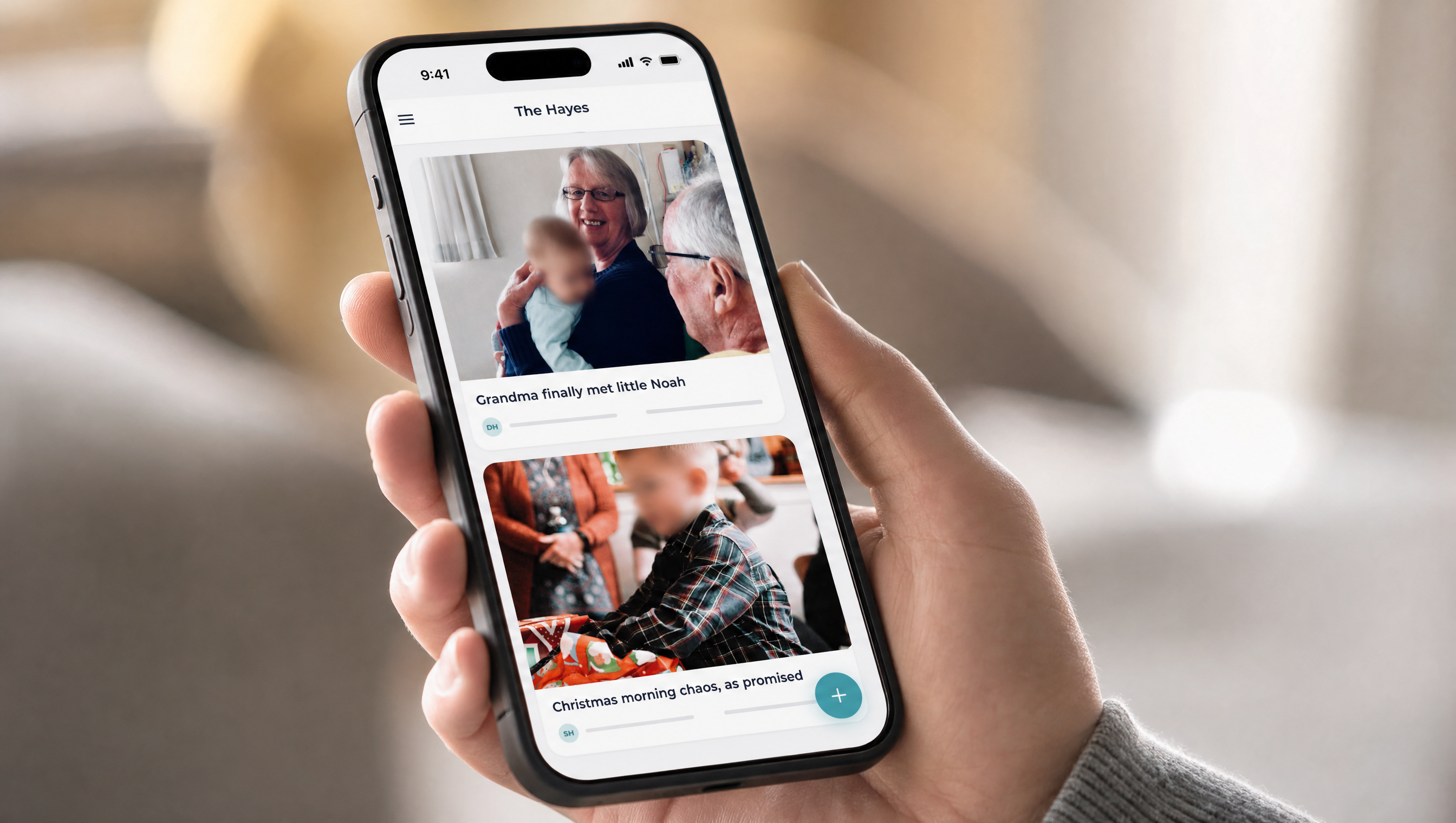
That is the whole idea behind Kinfeed. Photos go to your family’s private feed only, nobody outside the group can see them, there is no algorithm deciding who sees what, and there are no ads paying for the service by studying your photos. It will not stop every risk in the world, but it removes the biggest one: the photo simply never becomes public in the first place. If you want the fuller picture of how we think about this, our about page covers the reasoning behind Kinfeed in more detail.
A short, honest checklist
If switching to a closed app is not happening today, these steps still help:
- Turn off location tags before you post, especially anything that reveals a school or daily route.
- Check who can actually see your account, not just who you think can see it.
- Ask before posting a photo of someone else’s child, the same way you would want to be asked.
- Save the sensitive stuff, the bath photos, the medical moments, for a private, closed channel only.
FAQ
Is it safe to post photos of my kids online in 2026?
It depends on where. A public account carries real risk from AI scraping, cloning, and reuse. A closed, invite-only app shared with family only carries far less, because the photo never reaches the open internet.
What is sharenting?
Sharenting is the common term for parents regularly sharing details of their children’s lives on social media, from photos to milestones to daily updates. It is not inherently harmful, but it adds up over a childhood into a large, often public archive the child never agreed to.
How can I share family photos without the privacy risk?
Keep the circle closed. A private family app like Kinfeed, a direct message to specific people, or a physical album all keep photos out of public reach. The risk mostly comes from photos that end up visible to anyone, not from sharing itself.