TL;DR: Long distance grandparents stay close not through big visits, but through small, regular contact, seeing the everyday moments as they happen instead of a summary months later. A private family feed is a low-effort way to give them that.
Moving away from family does not end a relationship, but it does change its shape. My own family is split between Norway and Oman, and the hardest part was never the big events, we always found a way to be there for those. It was the small stuff quietly disappearing.
The Tuesday afternoon at the park. The first wobbly bike ride. The face someone makes right before they laugh. None of that is dramatic enough to schedule a video call around, and all of it is what makes someone feel like part of a child’s actual life instead of a guest in it.
Why long distance grandparents end up feeling like guests
Research on long distance grandparent-grandchild relationships backs this up. A study indexed on PubMed that tracked these relationships over time found what kept them strong was not the number of visits, it was the presence of small, ongoing contact between them. Grandparents who only heard from the family during big planned calls tended to feel like they were catching up on a life already lived, rather than sharing one as it happened.
That gap is easy to underestimate from the parent’s side. You are living the day, so it feels present to you. To a grandparent three time zones away, it is old news by the time a phone call gets scheduled.
What actually closes the gap
Video calls in 2026 are easier than they were even five years ago, and they still are not enough on their own. A scheduled call is a single data point. It cannot carry a whole week of small moments, and it usually is not what people mean when they say they miss being close.
A few things consistently help, according to both research and the families who have lived this:
- Frequency over intensity. 3 or 4 small updates a week beat one 30-minute planned call a month.
- Seeing the ordinary moments, not just the milestones, since the ordinary moments are what daily closeness is actually made of.
- A shared way to look back, so a grandparent can scroll through a birthday, a first day of school, and a random Tuesday in the same place.
- Something the grandparent can check on their own time, without waiting for someone to remember to call.
Where a family feed fits in
This is the exact gap Kinfeed was built to close. It started from personal experience, after moving to Oman, keeping family in Norway part of daily life, not just birthdays and holidays, became the whole reason for building it.
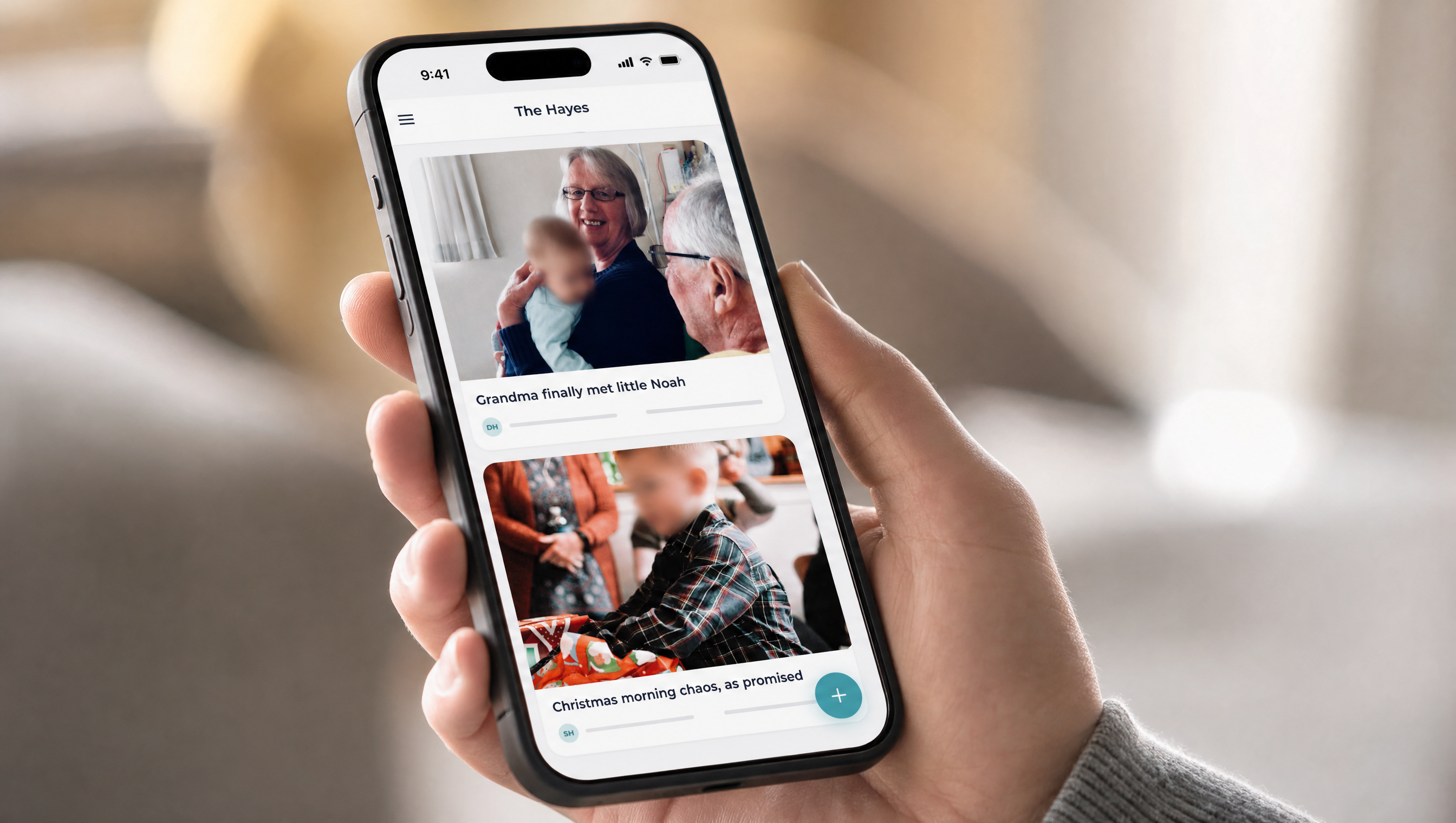
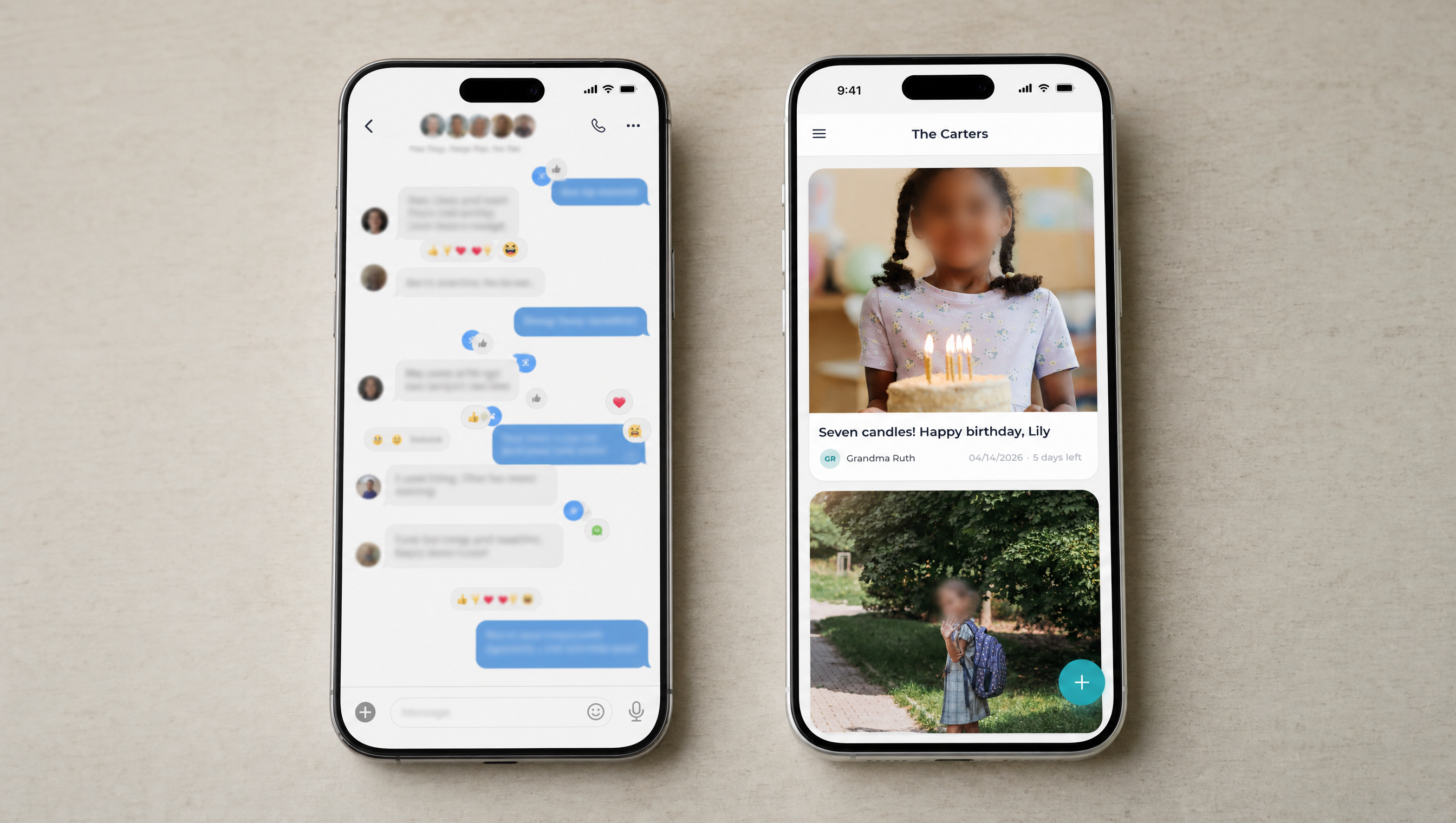
A closed, chronological feed means a grandparent opens the app and sees today’s photo next to last week’s, in order, without hunting through a group chat or waiting for someone to compile a “catch up” album. No algorithm decides what they see. No one has to remember to forward anything. It is simply there, the same way it would be if they lived down the street. If you want to see what that everyday feed actually looks like, the app is the fastest way to check.
A small habit that changes a lot
None of this requires a grand gesture. Posting one ordinary photo 3 or 4 times a week, the kind you would never think to send in a special message, does more for a long distance relationship than one perfectly curated update a month. The small stuff is the relationship. It is just easier to lose track of when there is an ocean or two in between, and easier to hold onto once there is a simple, shared place to put it.
We also cover how a plain feed structured by time, rather than by algorithm, keeps everyday moments from getting buried, in our piece comparing family photo apps.
FAQ
How can grandparents stay close to grandchildren who live far away?
Regular, small updates work better than occasional big ones. Seeing ordinary daily moments, not just milestones, is what research on these relationships points to as the strongest factor in staying close over distance.
What is the best way to share photos with grandparents overseas?
A shared, chronological feed that grandparents can check on their own schedule tends to work better than group chats or occasional email albums, since nothing depends on someone remembering to send an update.
Does video calling replace everyday photo sharing?
It complements it rather than replacing it. Calls are good for real conversation, but they are usually planned and infrequent. A running photo feed fills the space in between, so a grandparent is not only catching up during a scheduled call.