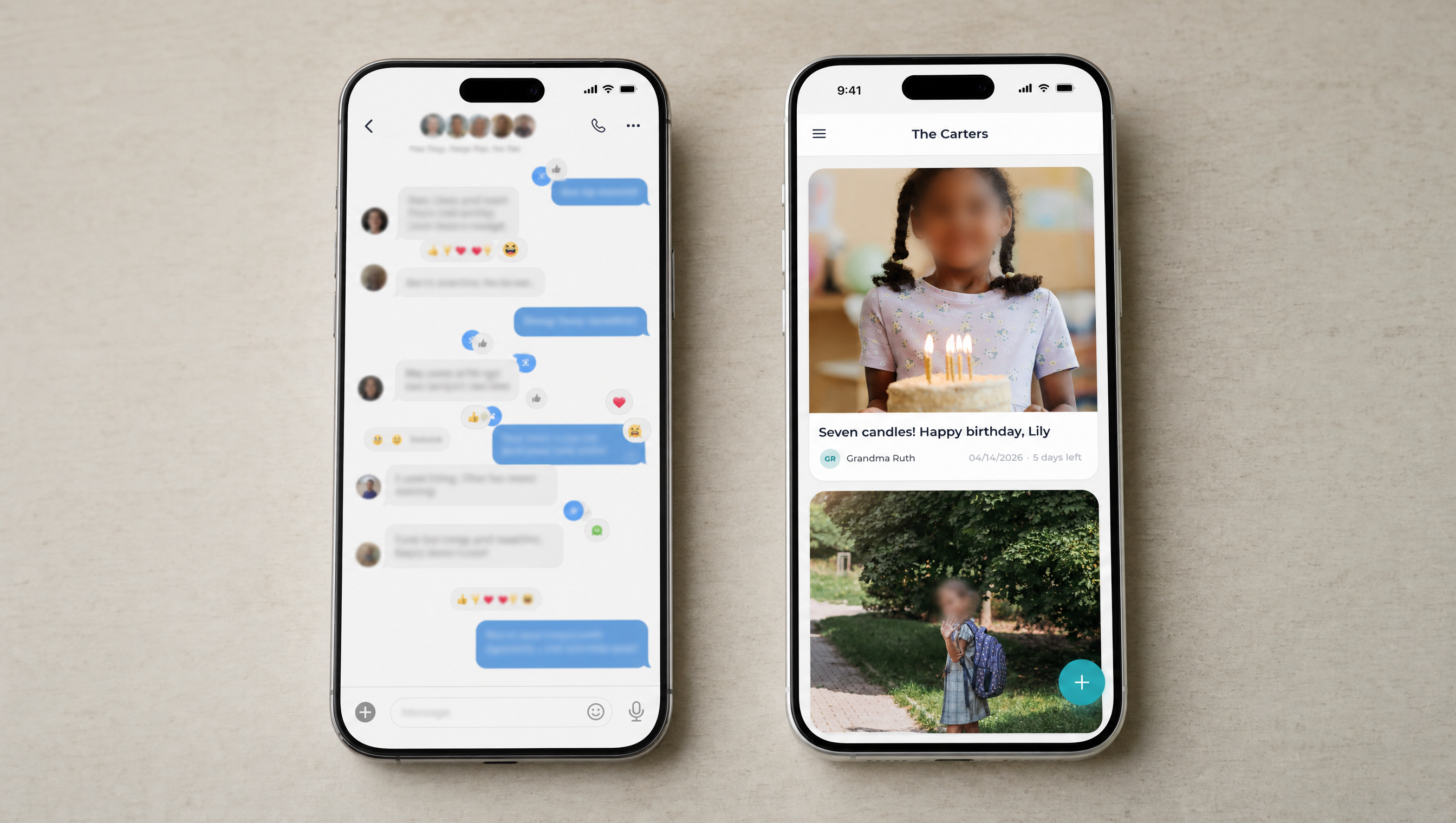
TL;DR: A chronological photo feed shows what happened, in order, with nothing deciding what you see but time. An algorithm-sorted feed shows what keeps you scrolling. For family photos, those are two very different jobs, and only one of them is actually about your family.
There was a stretch of time, before Instagram got serious about engagement, when opening the app just meant seeing what your friends posted, in the order they posted it. Instagram switched to an algorithmic feed in 2016, and most of the industry followed within a few years. Nobody had thought yet, before that, to sort a feed by what might keep you on the app longest. It was a small, plain thing. People miss it more than they probably realize.
What an algorithm is actually optimizing for
An algorithmic feed is not neutral. It is built to hold your attention, which usually means favoring whatever gets a reaction, a like, a comment, a stop-and-stare. That is a fine goal for an entertainment app. It is a strange goal for a record of your own family’s life, where the point was never to be entertaining, it was to be true. A chronological photo feed removes that layer entirely. Nothing is promoted because it is dramatic. Nothing is buried because it is boring. The kitchen mess between the birthday parties gets to exist too.
Why the boring photos matter
The blurry one where someone sneezed. The fortieth photo of the same puzzle, taken because it was somehow still holding someone’s attention. The dinner table on an ordinary Tuesday, nothing to celebrate, nothing to caption. None of that is content in the way social media has trained people to think about content. It is just what a childhood, or a life, actually looks like most of the time.
A highlight reel is a curated best-of. A chronological feed is closer to a diary. One is built to impress an audience. The other is built to be looked back on in ten years and actually feel like it happened.
Ask anyone who has scrolled back through years of an old, unsorted camera roll which version they reach for. It is almost never the polished one, it is the ordinary Tuesday that makes them stop scrolling.
The research backs the discomfort people already feel
This is not just nostalgia talking. Research on feed design, including a 2026 analysis published in Nature on redesigning social media algorithms, has found that the way a feed sorts and surfaces content measurably shapes how people feel while using it, not just what they end up seeing. A feed optimized to maximize engagement is, by definition, optimized to change your mood enough to keep you there. A feed with no such goal simply is not trying to do that to you, or to your kids’ baby photos.
What this looks like day to day
A few small differences show up fast once a feed stops being sorted by an algorithm:
- Today’s photo sits next to yesterday’s, in the actual order they happened.
- Nothing gets more visibility for being dramatic or upsetting.
- Scrolling back a year feels like flipping through a photo album, not searching an archive.
- There is no pressure to post something “good,” because nothing is competing for reach.
Slow tech, on purpose
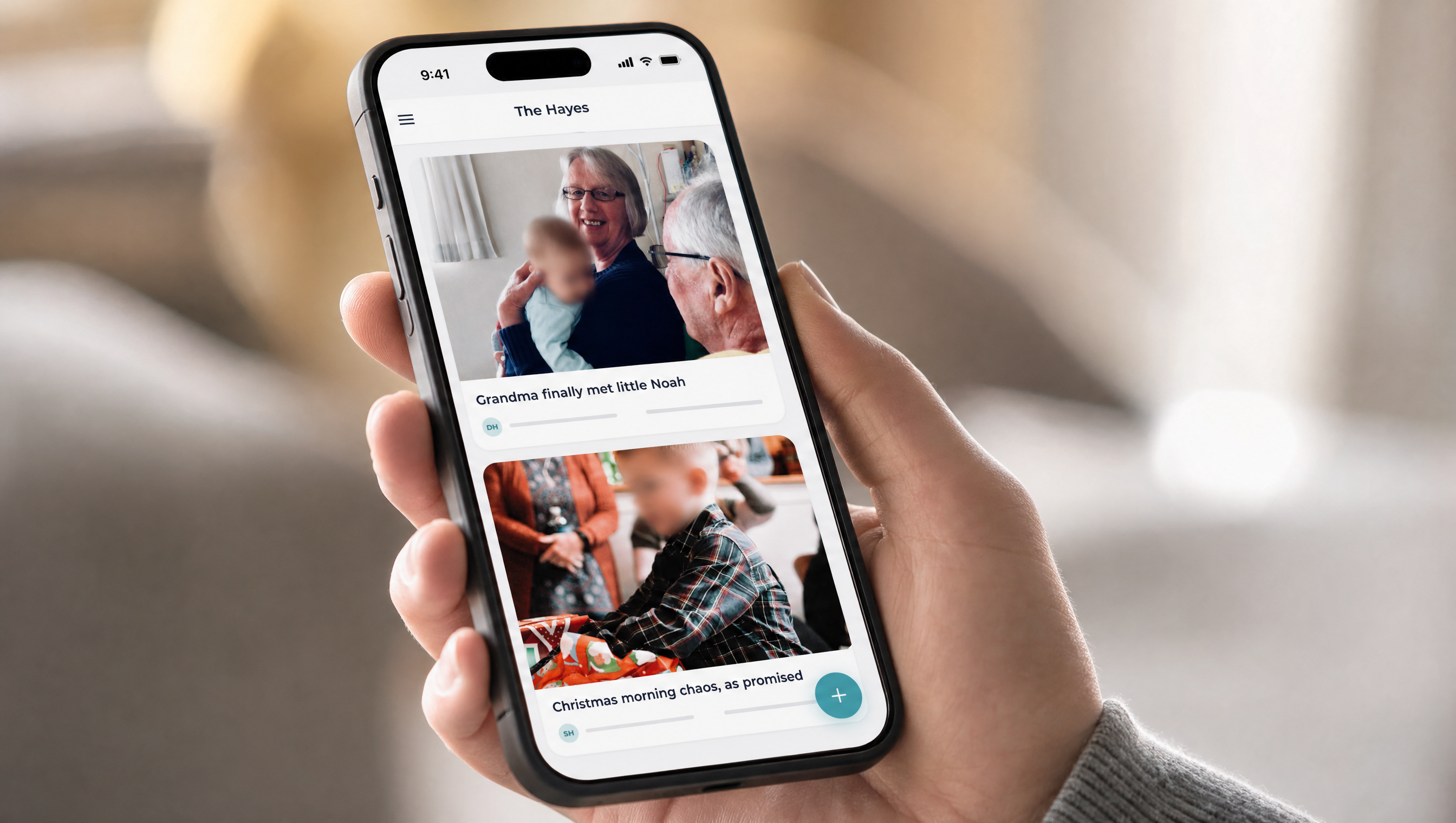
This is the whole premise behind Kinfeed: a private family feed with no algorithm, no ads, and no likes or comments turning photos into a popularity contest. Images even fade out over time unless someone actively marks them as a memory worth keeping, which is closer to how memory actually works than an infinite, permanent scroll. If chronological, private, and boring-in-the-best-way sounds like what a family photo feed should have been all along, take a look at the app. We also wrote about the flip side of this, what actually happens once a photo leaves a closed feed and becomes public, in this piece on sharing kids’ photos online.
FAQ
What is a chronological photo feed?
It is a feed that shows posts in the exact order they were made, most recent first, with nothing reordering or hiding content based on engagement. It is the opposite of an algorithmic feed, which sorts by what is predicted to hold your attention.
Why did Instagram move away from a chronological feed?
Platforms that make money from advertising are generally rewarded for keeping people scrolling longer, and algorithmic sorting tends to do that more effectively than showing posts in plain time order.
Is a chronological feed better for sharing family photos?
For a family archive, yes, in most cases. There is no benefit to an algorithm deciding which of your child’s photos “performs” better, and a real risk that it quietly buries the ordinary, everyday moments that make up most of a childhood.